Light Bulb Disposal in San Francisco: Separate Bulbs Before Junk Pickup
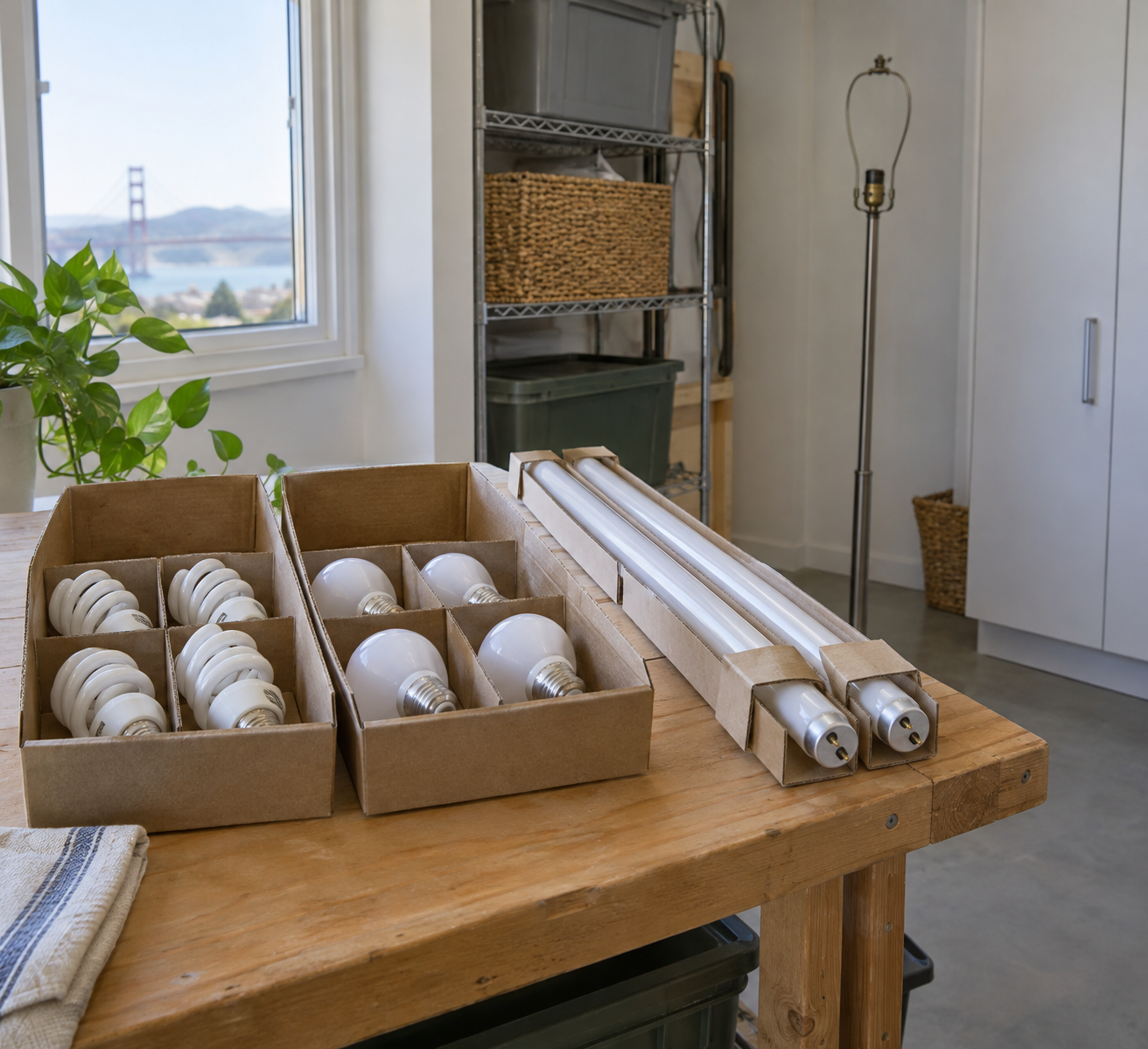
In San Francisco, fluorescent bulbs, fluorescent tubes and LED bulbs need separate disposal, not a place in your household bins or mixed junk load. Incandescent and halogen bulbs can go in the black landfill bin. Identif
In San Francisco, fluorescent bulbs, fluorescent tubes and LED bulbs need separate disposal, not a place in your household bins or mixed junk load. Incandescent and halogen bulbs can go in the black landfill bin. Identify the bulb type and arrange an appropriate collection option before clearing out lamps, shelving or furniture. JYR Junk Removal does not accept hazardous waste. The city’s lighting guide explains these different disposal routes.sfenvironment.org
Start with the bulb, not the fixture
For your cleanout plan, list loose bulbs separately from floor lamps, desk lamps and ceiling fixtures. A box marked simply as lighting does not tell a collection provider whether it contains ordinary household objects, fluorescent tubes or mixed bulb types. Describe each group when asking where it belongs.
Read any available packaging or product markings rather than guessing from shape alone. If the type remains unclear, photograph the bulb and its markings for the receiving program. Ask for identification and handling guidance before choosing a disposal route. Do not break a bulb to inspect it.
- Count loose bulbs separately from complete fixtures.
- Note whether you have compact bulbs, long tubes or both.
- Record whether anything is already broken.
- Identify whether the bulbs came from your home, a business or shared building areas.
- Keep the lighting inventory separate from your ordinary junk pickup request.
Which light bulbs need special disposal?
San Francisco Environment identifies compact fluorescent bulbs, fluorescent tubes, HID bulbs and neon signs as lighting that contains mercury. Its guidance also directs LED bulbs and tubes away from all three household bins, even though LEDs do not contain mercury. By contrast, incandescent and halogen bulbs belong in the black landfill bin, not the recycling bin. Follow the city’slight bulb disposal guidefor the distinction.sfenvironment.org
Recology separately confirms that fluorescent and LED lights should never go in any of its three carts. Do not assume that a bulb belongs in glass recycling simply because part of it looks like glass. Use the dedicated lighting disposal route for these items.recology.com
Choose a San Francisco household collection option
Check a participating neighborhood location
The city’s directory for CFLs and tubes lists participating hardware stores and other collection locations. It states a maximum of five bulbs or tubes per day at retail collection locations and excludes business waste from those retail programs. The directory also advises checking hours and service availability before visiting.sfenvironment.org
Use theofficial CFL and tube directoryto identify a candidate location. Before leaving home, ask whether that location accepts your exact bulb type, tube length, quantity and condition. For LEDs, verify acceptance specifically rather than assuming a CFL listing covers them.
Use the household hazardous waste facility
San Francisco’s household hazardous waste facility is at 501 Tunnel Avenue. Recology currently lists residential hours as Thursday through Saturday, 8 AM to 4 PM, with holiday closures. Review thecurrent facility guidancebefore traveling, especially during November’s holiday period.recology.com
The city requires proof of San Francisco residency, such as a driver’s license or utility bill, for household hazardous waste delivery. Its published household limits are 15 gallons or 125 pounds. These are facility requirements, not permission to bring every material or unlimited quantities of lamps. Confirm the details of your planned delivery first.sfenvironment.org
Ask about residential home collection
Recology says residents with more than one hazardous waste item may request free home collection and must describe the types and amounts involved. Residents must be home because hazardous waste cannot be left on the sidewalk. Priority goes to elderly and disabled residents who do not drive. This is a separate hazardous waste service, not a JYR booking.recology.com
Do not apply household rules to business lighting
Bulbs from an office, shop or apartment building’s shared hallway need a different eligibility check from bulbs used inside your own home. San Francisco Environment specifically identifies additional requirements for lighting from businesses and common areas of managed properties. Itsbusiness lighting fact sheetaddresses proper handling, storage and disposal.sfenvironment.org
Before arranging a building cleanout, identify who is responsible for the lighting waste. Ask that person to confirm the approved collection route and any documentation needed. Keep that task separate from decisions about desks, shelving and other ordinary bulky objects. Do not take business bulbs to a retail program that explicitly excludes business waste.sfenvironment.org
Plan two separate removal tasks
For a mixed cleanout, create one list for ordinary bulky items and another for bulbs needing special disposal. Ask the lighting program for packing and transport instructions appropriate to the actual bulbs you have. Tell it about broken items before arrival rather than treating them as intact bulbs.
Then prepare the ordinary junk request with photos, item counts and access details. Include stairs, narrow doorways and any fixtures that are still attached. Do not assume a removal booking includes electrical disconnection or dismantling. Ask what preparation is required before confirming the scope.
JYR does not accept hazardous waste, so keep hazardous bulbs out of the proposed load. ReviewJYR pricing informationand usethe booking formto describe the remaining ordinary items. For broader sorting preparation, see ourgarage cleanout checklist. A booking request is not confirmation that every item pictured is accepted.
Frequently asked questions
Can LED bulbs go in San Francisco recycling?
No. Recology identifies LED lights as items that should never go in any of the three household carts. Arrange separate disposal and verify that your chosen collection location accepts LEDs.recology.com
Are fluorescent tubes free to drop off?
Recology lists free disposal at the San Francisco Transfer Station for up to 30 fluorescent lamps per customer per month. That allowance differs from the city’s retail collection limit. Confirm the applicable program and any charges for larger quantities before transporting them.recology.com
What if a fluorescent bulb is already broken?
Treat it as a separate handling issue. San Francisco Environment directs residents to specific cleanup guidance for broken fluorescent bulbs and to hazardous waste collection for the resulting material. Consult that guidance before cleanup and tell the receiving program that you have broken material.sfenvironment.org
Can I leave hazardous bulbs outside for pickup?
Not for Recology’s residential hazardous waste collection. Its instructions require you to be home and prohibit leaving hazardous waste containers on the sidewalk. Confirm the collection arrangements directly with that program.recology.com
Can JYR take the bulbs with my furniture?
JYR does not accept hazardous waste. Arrange an appropriate separate route for hazardous bulbs, then request a quote for the ordinary bulky items you want removed. Identifying both groups before booking keeps the requested work clear.
Need junk gone in San Francisco?
Same-day pickup, upfront pricing, eco-friendly disposal. Free quote in 60 seconds.